
How Does S-AWC Work on the 2026 Eclipse Cross near Newark, DE?
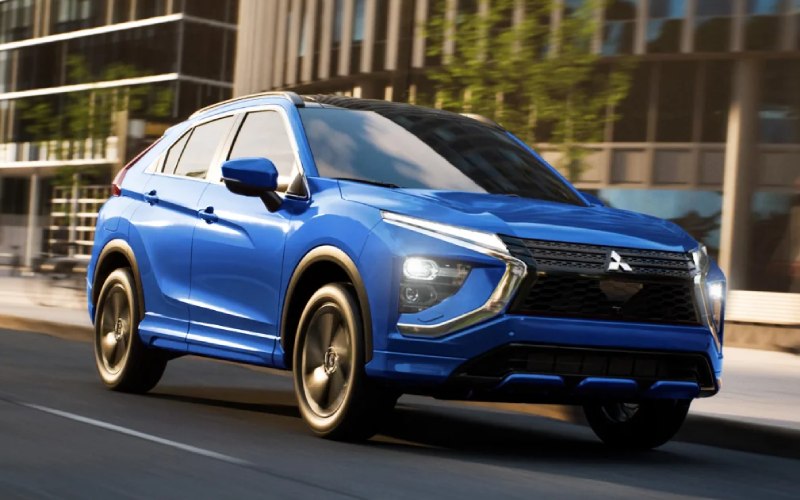
*Not actual model
Sheridan Mitsubishi – How Does S-AWC Work on the 2026 Eclipse Cross near Newark, DE?
Shoppers comparing compact SUVs often ask how all-wheel-drive systems differ in real-world driving. On the 2026 Eclipse Cross, Mitsubishi’s Super-All Wheel Control (S-AWC) sets the tone for confident traction and a settled, predictable feel — especially useful on wet bridges, slushy side streets, and uneven suburban pavement around Newark, DE. Instead of simply sending power to all four wheels, S-AWC works as an integrated control system that manages torque distribution and vehicle dynamics to enhance stability and cornering poise.
The result is subtle but reassuring: cleaner, more direct responses when you turn the wheel, composed acceleration on low-traction surfaces, and a calmer cabin because the vehicle is not fighting for grip. Where traditional AWD may react after a slip, S-AWC is designed to anticipate and help prevent loss of composure. This makes the Eclipse Cross easy to trust in daily commuting and on spontaneous weekend drives, without requiring you to micromanage settings or technique.
- What S-AWC manages: Torque split, yaw control, and anti-slip regulation work together to promote grip, directional stability, and precise steering feel.
- How it feels on-road: Steering inputs translate smoothly, body motions are better controlled, and acceleration is more confident on slick sections.
- Daily driving benefit: Peace of mind in rain and light snow, plus relaxed highway tracking when crosswinds or changing surfaces would otherwise unsettle the vehicle.
In practice, that means fewer surprises. Taking a sweeping on-ramp in the rain feels composed, and navigating a rutted, damp neighborhood street after a storm is more predictable. The tech stays behind the scenes, so you enjoy the benefits without extra steps or distractions. Paired with driver-assistance features such as Forward Collision Mitigation (FCM) with Pedestrian Detection and available Blind Spot Warning (BSW) with LCA and RCTA, the Eclipse Cross layers control and awareness for a more confident drive.
To get the most from a test drive, plan a route that includes neighborhood streets, a highway loop, and a couple of tighter turns. Pay attention to how the steering settles mid-corner and how the Eclipse Cross tracks straight when the road camber changes. If conditions allow, drive over damp patches or imperfect pavement to feel how S-AWC preserves stability. Ask a product specialist to walk you through modes and how the system balances traction with comfort — a key advantage for daily usability.
Frequently Asked Questions:
Is S-AWC always on?
S-AWC continuously monitors traction and driver inputs, then responds automatically to help maintain control. You do not need to switch it on for normal driving.
Does S-AWC help in dry conditions?
Yes. Even on dry pavement, S-AWC can enhance steering precision and overall stability, lending the Eclipse Cross a settled, confident character in daily use.
How does S-AWC compare to basic AWD?
Basic AWD focuses on distributing power to four wheels. S-AWC adds integrated control that can influence torque split and yaw behavior to help keep the vehicle composed in corners and on varied surfaces.
What features complement S-AWC in the Eclipse Cross?
Key companions include Forward Collision Mitigation (FCM) with Pedestrian Detection, Lane Departure Warning (LDW), and available Blind Spot Warning (BSW) with LCA and RCTA, plus the available Multi-View Camera System for low-speed awareness.
If you would like a hands-on demonstration, our team can map out a route that showcases S-AWC without taking you off your beaten path. Sheridan Mitsubishi is proudly serving Newark, Bear, and Middletown, and we are ready to set up a test drive that mirrors your everyday routine so you can feel the system working for you.
0 comment(s) so far on How Does S-AWC Work on the 2026 Eclipse Cross near Newark, DE?